
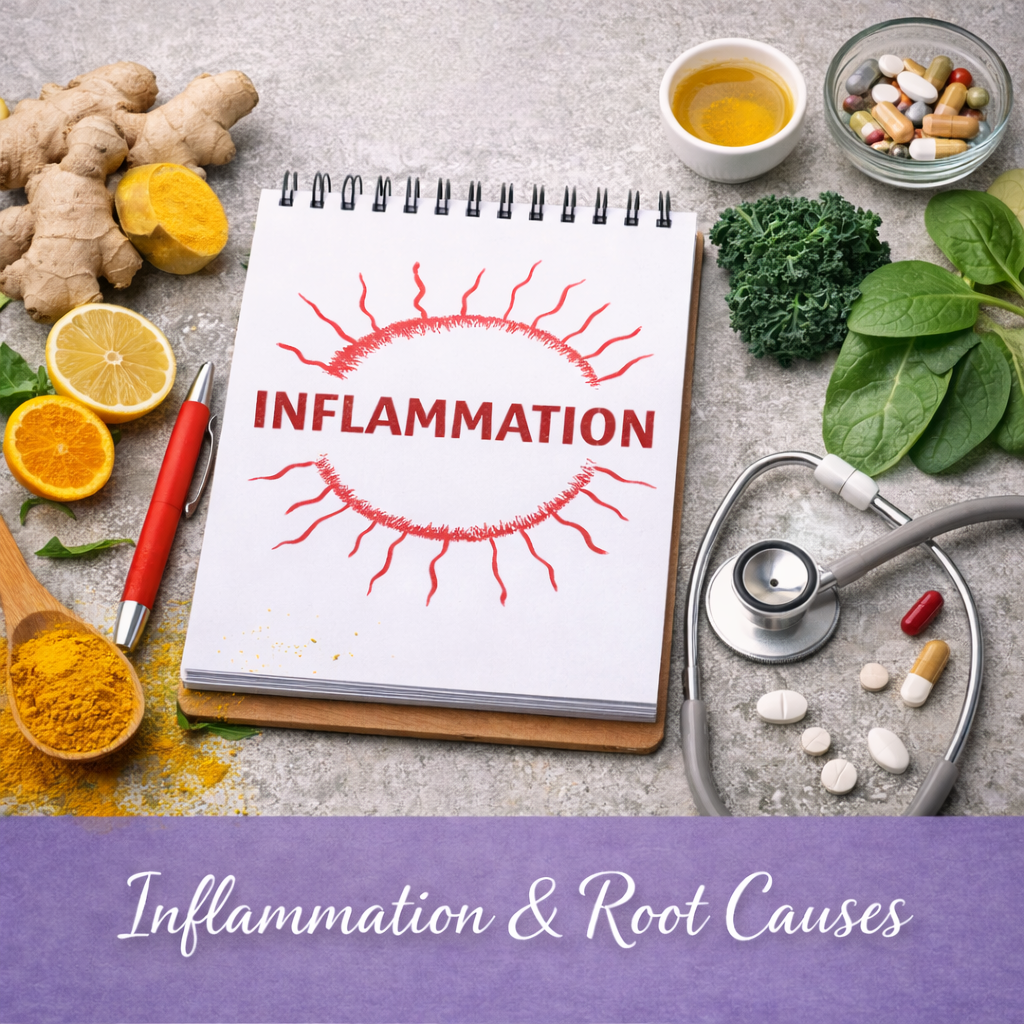
Inflammation is often spoken about as something to reduce or eliminate.
But from a root-cause perspective, inflammation is not the problem.
It is a signal.
You may notice:
- joint stiffness or discomfort
- digestive concerns
- skin changes
- persistent fatigue
- a general sense that your body feels "off"
And yet… you may be given solutions that focus only on managing symptoms.
From a deeper perspective, inflammation may be your body communicating that something beneath the surface needs attention.
Inflammation Is a Protective Response
Inflammation is your body's way of responding to stress or perceived threat.
It is designed to protect, repair, and restore.
However, when inflammation becomes chronic, it may indicate that your body is:
- under ongoing stress
- exposed to repeated triggers
- lacking the support it needs to fully resolve
This is where looking deeper becomes important.
Common Drivers of Inflammation
Rather than asking, "How do I reduce inflammation?" a more powerful question is:
What may be driving it?
Some common contributors include:
- chronic stress and nervous system dysregulation
- blood sugar imbalance
- nutrient insufficiencies
- digestive imbalances
- environmental exposures
- increased internal load on detoxification pathways
These factors do not operate in isolation.
They often overlap and influence one another.
When Symptoms Are Connected
You may be experiencing:
- fatigue
- brain fog
- hormonal changes
- skin concerns
- joint discomfort
These are often treated as separate conditions.
But when viewed together, they can reflect a broader pattern within the body.
Inflammation is often the thread connecting them.
The Role of the Gut and Immune System
A significant portion of your immune system is connected to your digestive system.
When the gut is under strain, it can influence:
- inflammation levels
- nutrient absorption
- immune response
- overall resilience
This may contribute to symptoms that seem unrelated on the surface but share a common root.
The Impact of Stress on Inflammation
Stress does not only affect how you feel—it affects how your body functions.
Chronic stress can:
- elevate inflammatory responses
- disrupt hormonal balance
- impact digestion and absorption
- reduce your body's ability to recover
Over time, this can contribute to a persistent inflammatory state.
Supporting the Body Holistically
Rather than suppressing inflammation alone, a root-cause approach focuses on supporting the systems involved.
This may include:
- stabilizing blood sugar
- supporting digestion
- restoring key nutrients
- reducing internal and external stressors
- supporting natural detoxification processes
Additional support may include:
- targeted supplementation to help address underlying imbalances
- nutrients that support inflammatory balance
- sauna or gentle sweating practices to support natural elimination
- red-light therapy for cellular support
- lifestyle practices that reduce overall stress load
These approaches are not about suppressing inflammation, but supporting the body in restoring balance.
When these systems are supported, the body is often able to recalibrate.
A More Intentional Perspective
Inflammation is not something to fear.
It is something to understand.
When you begin to view symptoms as communication rather than problems to silence, you open the door to a more sustainable path forward.